The Car Is the New Sanctuary: Why Gen Z Treats Every Drive Like a Private Ritual
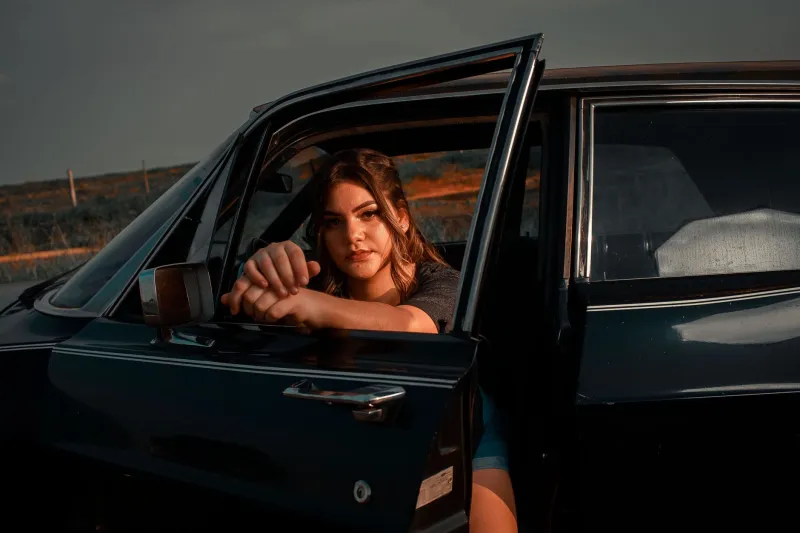
Somewhere between the morning coffee and the first Slack notification, there's a pocket of time that Gen Z has quietly claimed as entirely their own. It's not a meditation app. It's not a journaling session. It's the drive.
Yep — the commute. That stretch of road most people write off as dead time has become one of the most intentional parts of a young person's day. And honestly? It makes total sense.
From Dead Time to Sacred Time
For a generation that grew up with every moment documented, scheduled, and optimized, truly unstructured time is rare. There's always somewhere to be, something to post, someone to respond to. But the car? The car is different. You can't really multitask behind the wheel. You can't scroll. You can't perform.
That forced disconnection — which older generations might frame as inconvenience — is exactly what makes it feel so freeing. The drive is one of the last genuinely unplugged experiences built into everyday life, and Gen Z is leaning all the way into it.
A lot of young people describe their commute as the only part of the day where they feel like they're not "on." No audience. No algorithm. Just them, the road, and whatever they decide to fill the air with.
The Playlist Is the Ritual
Ask any Gen Z driver what their commute sounds like and you'll get answers that are surprisingly specific. Not just "I listen to music" — but detailed, almost ceremonial playlists built around mood, time of day, season, and even the specific route they're driving.
Morning drives might call for something slow and atmospheric — think Mk.gee, Yaya Bey, or early Frank Ocean cuts that ease you into the world rather than throwing you into it. Evening drives hit different. That's when the windows come down, the volume creeps up, and the playlist shifts toward something more cathartic — Brent Faiyaz, Lana Del Rey, Mitski, or whatever's been sitting in the "saves" folder waiting for the right moment.
Spotify even leaned into this with its driving-mode features, but Gen Z was already ahead of it. The manually curated "drive playlist" is practically a personality trait at this point — a reflection of taste, headspace, and emotional range that a lot of people wouldn't share anywhere else.
Podcasts and the Art of the Deep Dive
Not every commute calls for music. Sometimes the vibe is more introspective, and that's where podcasts come in — but not just as background noise. Gen Z is treating podcast time in the car as something closer to intentional learning or emotional processing.
True crime still dominates, sure. But a huge chunk of young drivers are using commute time to work through longer-form content they'd never sit down to watch on a screen: philosophy breakdowns, therapy-adjacent conversations, cultural criticism, interviews with creatives they admire. Shows like Anything Goes with Emma Chamberlain, Call Her Daddy, SmartLess, and The Ezra Klein Show rack up serious play counts specifically during drive time.
There's something about the car environment — contained, low-stimulation, slightly hypnotic — that makes it easier to actually absorb what you're hearing. You're not half-watching. You're just... listening. And for a generation drowning in visual content, that's kind of radical.
Car-Specific Rituals That Are Genuinely a Whole Thing
Beyond audio, the car commute has spawned a whole ecosystem of small rituals that Gen Z takes seriously.
There's the pre-drive setup: adjusting mirrors just so, picking the scent (yes, car fresheners have become a mood-setting tool — Capri Blue, Pura diffusers, or even just a candle-scented clip from TJ Maxx), and choosing the right playlist before pulling out of the driveway. It sounds small, but it signals to the brain that this time belongs to you.
Then there's the post-work decompression drive — that extra loop around the block, or the slightly longer route home, taken specifically to decompress before walking through the front door. Therapists actually have a name for it: the "transition ritual." Gen Z just calls it "I need a minute."
Some people use red lights to do a quick emotional check-in. Others keep a note in their phone for thoughts that surface mid-drive. A few have started recording voice memos while they drive — not for content, just for themselves. Unfiltered, unedited, unpublished thoughts captured in real time.
The Summer Commute Hits Different
All of this intensifies in the summer. Windows down, golden light slanting through the windshield, the specific smell of hot pavement mixing with whatever's coming through the vents — there's a sensory richness to summer driving that's hard to replicate indoors.
Summer also tends to bring longer drives: road trips to the beach, weekend escapes to somewhere with fewer people and more sky, late-night cruises that don't really have a destination. These extended drives become something close to meditation — a moving stillness that clears the mental clutter in a way that sitting still rarely does.
For Gen Z, who came of age during a pandemic that blurred every boundary between work, home, and self, the car represents something quietly powerful: a space that's entirely theirs, that moves when they move, that asks nothing of them except to keep their hands on the wheel.
Reclaiming the In-Between
There's a broader cultural shift happening here that goes beyond just driving. Gen Z is actively pushing back against the idea that every moment needs to be productive, optimized, or shared. The "main character" energy that defined early 2020s internet culture is giving way to something quieter — a preference for private experience over public performance.
The commute fits perfectly into that shift. It's not content. It's not a flex. It's just yours.
And in a summer that feels busier and louder than ever, finding a moving pocket of silence — or at least, your own personal soundtrack — might be the most radical self-care move of the season.
So next time someone asks how you're managing it all, you can just smile and say: I've got a really good drive playlist.